
Down cow nursing care
Spring is a busy time of year for all, and it pays to be organised ahead of the peak to help things run more smoothly.
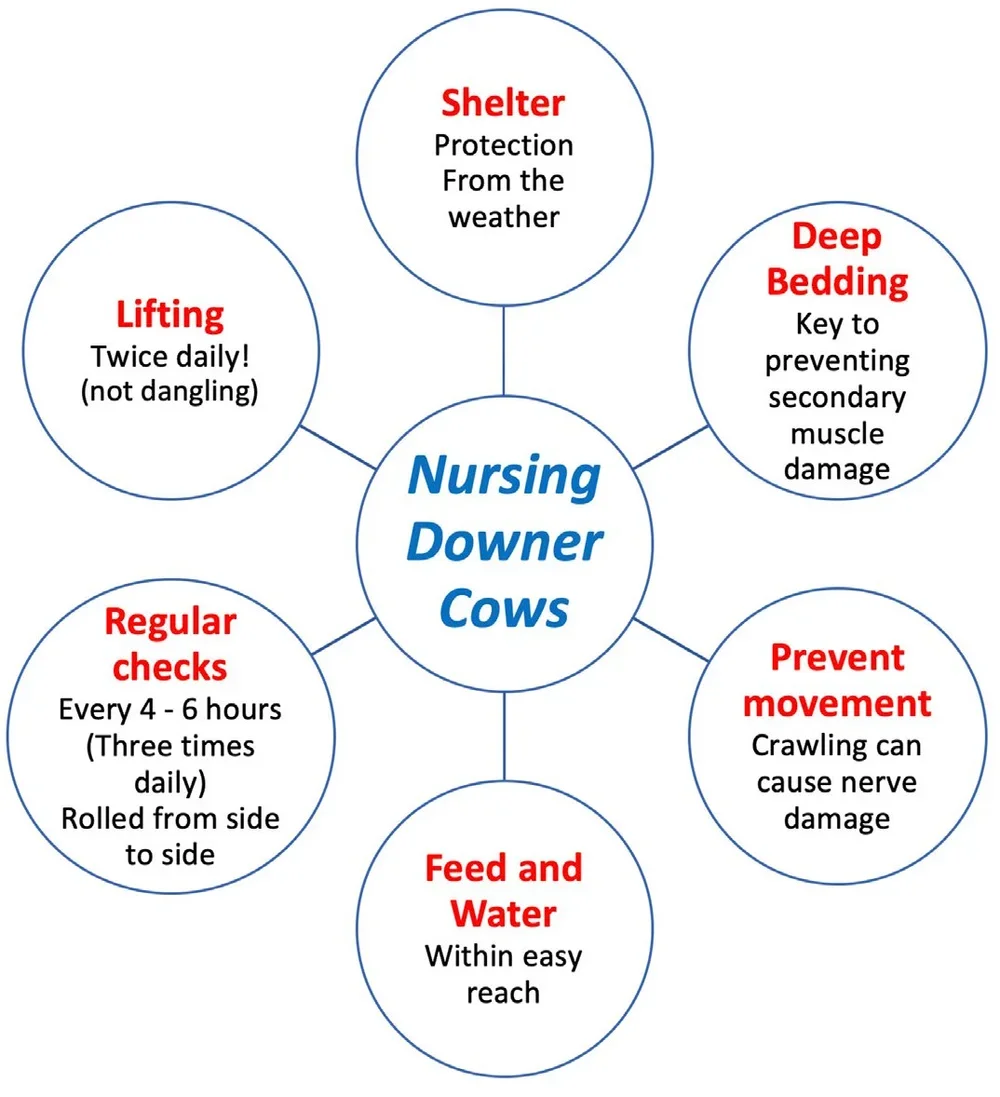
Often overlooked, nursing care is the biggest factor that influences downer cow survival. Having facilities and procedures organised early is key to providing appropriate nursing and can make all the difference to your herd.
Appropriate nursing helps increase the chances of a cow’s survival by preventing the development of secondary complications such as muscle and nerve damage.
Secondary damage is just as likely to be reason for a down cow as the original ailment affecting the cow; in these cases, the fence at the top of the cliff is much more effective than the ambulance at the bottom.
There are six essential areas to downer cow nursing on top of treating the primary condition as shown in the diagram.
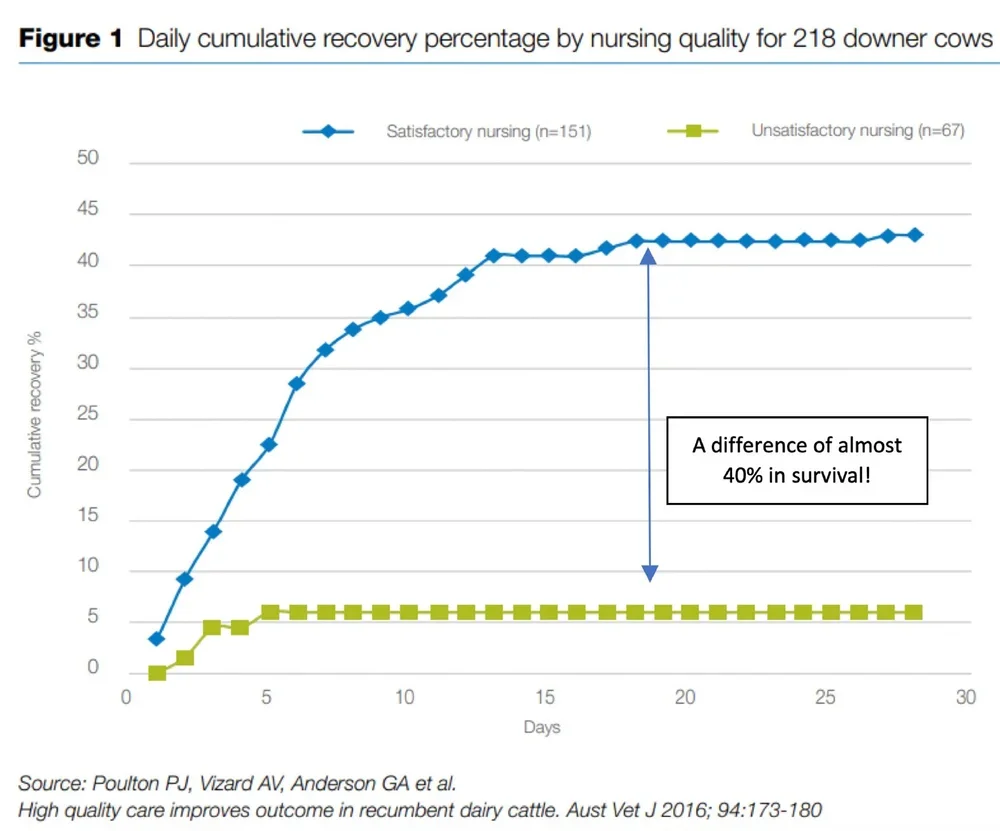
This graph shows the impact that good nursing of downer cows can have on survival rates. Without proper nursing, cows have an even slimmer chance of recovery. Euthanasia is always an option in non-responsive cases, and if a cow has been down for more than 12 hours, the chances of recovery are already below 50%.
Positioning

If she’s lying on her side, sit her up as lying down can cause bloating and aspiration. Later, roll her to the opposite side and repeat this several times a day to relieve pressure on tissues. Imagine the tingling sensation that comes from lying on your arm in bed all night. Cows will often attempt to stand but may end up crawling, leading to secondary nerve damage. Preventing movement forward may be necessary
Lifting
Hip lifters should only be used to promote standing. Don’t use these to move or drag her. Lift only to a height where the feet are on the ground but bearing minimal weight. Attempt to lift her twice daily
Cow Comfort
Don’t leave her lying on concrete or cold wet ground. And the mere weight of the animal on her muscles and nerves can lead to damage due to pressure. Move her to a sheltered area with deep straw bedding and away from other cows. Offer feed and water at all times and within easy reach. She may even need propping up with the placement of straw bales alongside. Provide regular udder relief by stripping milk out. Give anti-inflammatories/pain relief.

PREPARE NOW
• Prepare a downer cow kit containing essential metabolic bags and oral solutions.
• Prepare a down cow area where adequate nursing care can be provided. Good nursing care improves a cow’s survival and prevents secondary damage.
• Train staff in handling down cows. As always, we are happy to provide advice but the hard work and dedicated care must come from your team. A half-hearted approach will only yield poor results.

TIPS
• Before giving a metabolic bag, immerse the bag in a bucket of warm water – this will make it easier to absorb.
• Check the udder! Severe mastitis can cause a cow to go down.
• Consider preventative treatment of cows at greatest risk or subclinical milk fever.
• Do everything on Day 1 to keep the cow’s motor running.
• Metabolic solutions are only a part of the treatment kit – lime flour and magnesium supplementation are essential.
• Use anti-inflammatories & pain relief if she stays down or has suffered trauma.
KEY POINTS:
• Set aside a downer cow area in advance (now!)
• Treating the primary condition is great, but this is worthless unless you prevent secondary damage.
• A half-hearted approach will yield poor results. All or nothing!